



Mangroves, Seizures and Beach Clubs: How to Price Environmental Risk Into Riviera Maya Coastal Purchases

Why three separate stories belong in one risk file
Within a few days at the end of October 2026, three coastal markets in the Riviera Maya produced three different kinds of environmental signal. In Cozumel, activists denounced an alleged illegal road and gate cut through the Playa Mía mangrove, works they link to Royal Caribbean's Royal Beach Club project. In Tulum, federal authorities seized a real estate property after a complaint about illegal clearing of wetland vegetation. In Puerto Morelos, SEMARNAT authorized a new beach club on 761 square metres of land gained from the sea inside the Parque Nacional Arrecife de Puerto Morelos.
Read together, they describe a regulator that is not only writing rules but acting on them — sometimes against a project, sometimes in favour of one. That distinction matters for buyers. The Cozumel complaint is an allegation with no confirmed ruling or sanction. The Tulum seizure is an investigation in which liability has not been established and no arrests were reported. The Puerto Morelos beach club is an authorization, not a violation, and its practical effect on public access is contested. None of the three, on its own, tells you what a specific property is worth.
Cozumel: the mangrove complaint and what it reveals about process
The Cozumel complaint concerns the Royal Beach Club, promoted by Desarrolladora Turística L.18 de México, described as a Royal Caribbean subsidiary. The reported scope is 17.42 hectares, 4,000 daily visitors, 2,000 loungers and 24 palapa-style structures, with the site partly inside the Parque Nacional Arrecifes de Cozumel. Conanp has reportedly issued a technical opinion of infeasibility, citing reefs, sea turtles, Thalassia seagrass beds and the privatization of public beaches. The environmental impact statement remains under evaluation at SEMARNAT with a file in "extension of term" status since 12 May, which the reporting says should not exceed 60 working days under law.
For an investor, the instructive part is not the allegation but the sequence. Activists say personnel and machinery entered the jungle and mangrove and installed a wooden gate before any definitive permit was granted, and local legal teams were preparing a Profepa complaint. Playa Mía is described as the last public beach with free access for local residents. Whether or not the complaint is upheld, the case shows that a project can be physically underway while its environmental file is still open — precisely the gap a buyer's diligence should close.
Cozumel's wider market context sharpens the stakes. Sales reportedly fell up to 50% over the last year amid oversupply, and the island's urban development programme is being revised, which Reporteros de Banqueta (23 September 2026) reported as a live permitting risk and opportunity because density, height and use permissions may change.
Tulum: enforcement with a warrant, not a fine
The Tulum case is the clearest example of federal enforcement reaching a private project. The Attorney General's Office seized a property near Tulum after Profepa filed a complaint about illegal removal of wetland vegetation. Acting on a court-authorized search warrant on 8 October, Federal Ministerial Police, forensic experts and Profepa personnel entered the site; the Federal Public Prosecutor confirmed alleged removal of secondary mangrove vegetation for construction without the required environmental permits. The property was placed under federal custody as part of an investigation into potential crimes against biodiversity, with the perimeter secured by the Army, Navy and National Guard.
No arrests were reported and the FGR is still working to determine environmental impact and establish liability. The property was not named. That anonymity is itself a diligence problem: a buyer researching a specific parcel in the area cannot assume the seizure did or did not touch it, and should ask directly.
Tulum's regulatory environment is unsettled in other ways. State officials have said municipal programmes are being modified to avoid duplication with ecological ordinances and amparos. Environmental groups are calling for a halt to new real estate approvals, citing drainage and cenote protection, and state authorities have flagged multiple developments operating without permits.
This lands in a market already in a sharp demand correction: hotel occupancy averaged 63.69% from January to July 2026 against 72.67% a year earlier, the airport lost 33.6% of passengers between January and August, and average condo asking prices fell approximately 48% between 2023 and 2025, per AMPI Tulum figures cited by L'agence. A permit defect in a market with a three-to-four-year inventory overhang is not a theoretical risk; it is a liquidity risk on top of an existing one.
Puerto Morelos: when the permit is granted, the question changes
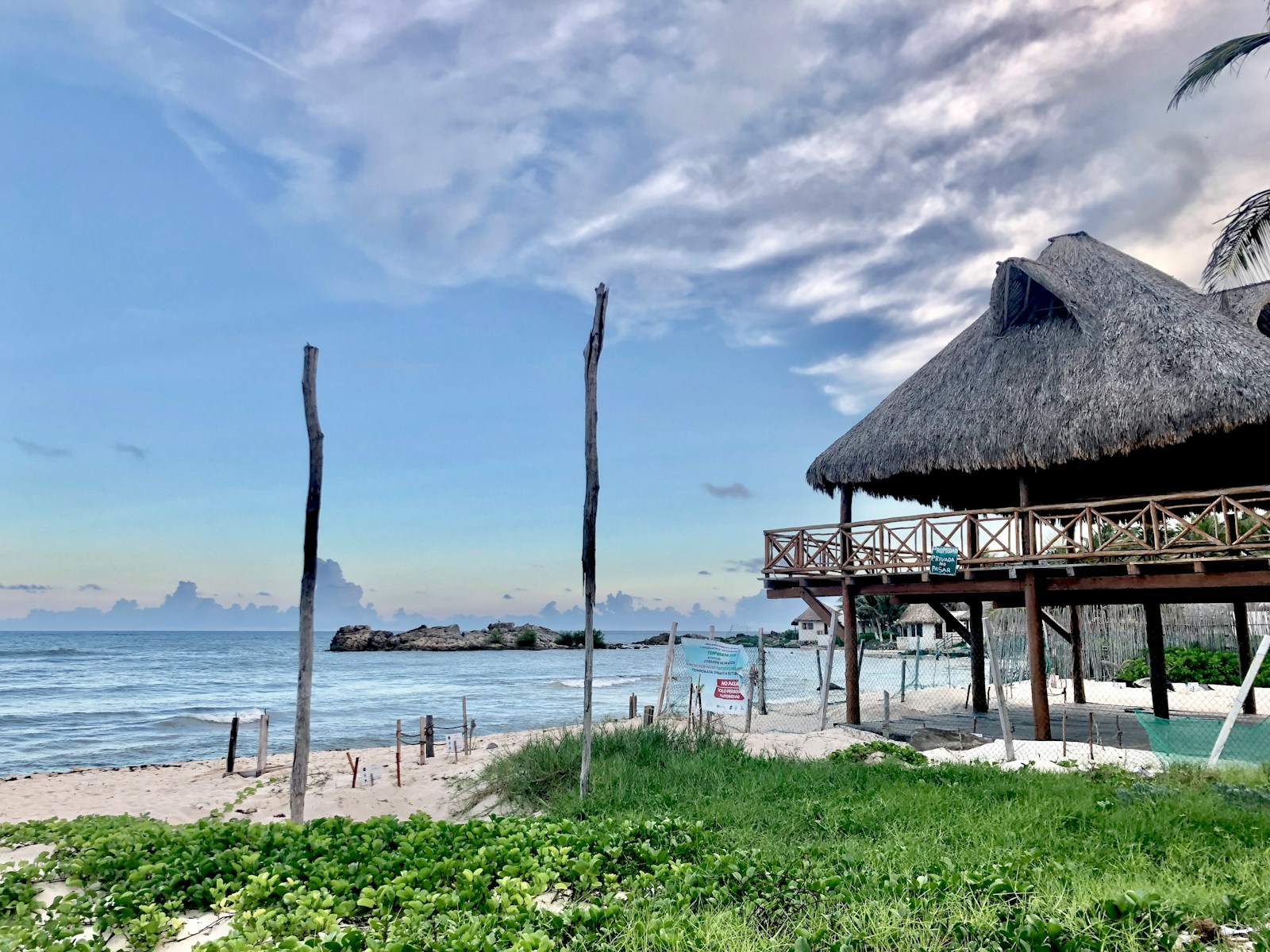
Club 8 is the counter-example. SEMARNAT authorized the beach club on 761 square metres of land gained from the sea, in an area zoned for intensive recreational use inside the national reef park, for a 30-year operation. The environmental impact statement describes a palapa bar with kitchen and bathrooms, plus tables, chairs, umbrellas and loungers. The site currently has no vegetation, is used openly by bathers, and shows constant sargassum and rubbish; the document acknowledges potential turtle arrival and nesting between May and September.
The access question is the one buyers should internalise. Mexican beaches are federal zone and access cannot legally be restricted, yet in practice fixed furniture, service bars and table areas condition how the space is used and displace people who are not customers. The project proposes removing outdoor furniture at night and suspending night-time activities, but the study does not explain what happens to nests or hatchlings if a turtle lays eggs in front of an occupied area — it only mentions patrols and keeping the beach clear of sargassum and rubbish.
For a beachfront owner or buyer in the hotel zone, that is a direct commercial variable. A neighbouring authorized concession can change the character of the sand in front of a property, and the new Club 8 authorization adds regulatory and public-access scrutiny to that corridor. Casamigo's October 2026 brief flags the most severe coastal erosion in Quintana Roo and reports a condo project halted for mangrove encroachment, an example it cites of strict environmental enforcement.
What the evidence does and does not establish
It would be easy to overstate this. The three events do not show that coastal permits are being systematically revoked, that prices in any of these markets have moved because of environmental enforcement, or that a particular development is unsafe. The Cozumel matter is a denunciation. The Tulum matter is an investigation. The Puerto Morelos matter is a granted authorization. No source in this packet quantifies a price discount attributable to permitting risk in any of the three cities.
What the evidence does establish is that the enforcement machinery is functioning and visible: a federal prosecutor acting on a warrant with military perimeter support, a Conanp technical opinion of infeasibility, as reported by Sipse, with the SEMARNAT file still open, and a SEMARNAT authorization issued inside a national park. For a buyer, that is a reason to treat permits and environmental status as verifiable facts to be checked rather than as paperwork to be assumed.
The buyer and investor analysis
The practical implication is not "avoid the coast." It is that environmental and permitting status should be priced as a distinct risk layer, separate from the market cycle. In Cozumel and Tulum, both buyer's markets with weak sales volumes, a permit defect compounds an exit-liquidity problem that already exists. In Puerto Morelos, a thinner, more lifestyle-led market, the risk runs the other way: a neighbouring authorization can alter the beach experience a buyer thought they were paying for.
Three questions follow naturally. First, does the parcel sit in or adjacent to a mangrove, wetland, dune or federal maritime-terrestrial zone, and is there a current environmental impact statement with a resolutive, not merely filed, status? Second, does the title and permit file match what is physically on the ground — the Cozumel and Tulum cases both involve works that allegedly preceded or exceeded authorization. Third, what is the public-access and concession situation on the sand in front of the property, now and for the next 30 years?
A fourth question is specific to timing. In Cozumel, the urban development programme is under revision; in Tulum, the new programme is contested and the state is reworking municipal plans; in Puerto Morelos, a new PDU was formulated after an SCJN notification and tightens development rules. A permit that is valid today may sit inside a polygon whose rules change. Buyers should ask which version of the plan governs the parcel and whether any amparo is pending.
How much should you actually price in?
The honest answer from this evidence is that the risk is real but unquantified. No source here provides a discount rate, a claims frequency or a price effect. What the evidence supports is a process conclusion: verify before you reserve, not after. Ask for the environmental impact statement and its current status, the land-use designation under the applicable programme, the federal zone concession where relevant, and written confirmation of what has actually been built against what was authorized.
Where a project's environmental file is still open, or where a neighbouring concession is newly granted, that uncertainty belongs in the negotiation — in price, in conditions, or in a decision to walk. It should not be treated as a reason to assume the worst about a specific property, nor as a detail to be waved through because the beach is beautiful and the market is soft.


Comments