


Navigating the 2026 Playa del Carmen PDU Update: Strategic Implications for Real Estate and Wealth Allocation

Executive Summary
Playa del Carmen remains one of the most dynamic real estate markets in the Riviera Maya. However, rapid demographic expansion is forcing a structural shift in how the city grows. The municipal government of Solidaridad is currently finalizing a major update to the Programa de Desarrollo Urbano (PDU).
While the final approval has faced recent delays due to extensive public and institutional feedback, the emerging regulatory framework signals a pivot from unbridled horizontal sprawl toward sustainable, vertical, and infrastructure-conscious densification. For real estate investors and wealth managers, this transition presents both heightened compliance risks and significant value-add opportunities.
The Current Legislative Landscape (As of Q2 2026)
Following the conclusion of technical workshops and public consultations in early 2026, the updated PDU is currently in its final review phase. Progress was notably paused in April to address over 900 observations submitted by citizens, the College of Architects of the Riviera Maya, and local business chambers.
As of June 2026, the municipal Cabildo has not yet published the final decree in the Periódico Oficial del Estado, meaning existing zoning laws technically remain in effect. However, forward-looking capital should already be positioning for the inevitable shifts outlined in the draft proposals.
3 Key Pillars of the 2026 PDU Update
1. A Shift Toward Vertical Integration and Urban Consolidation
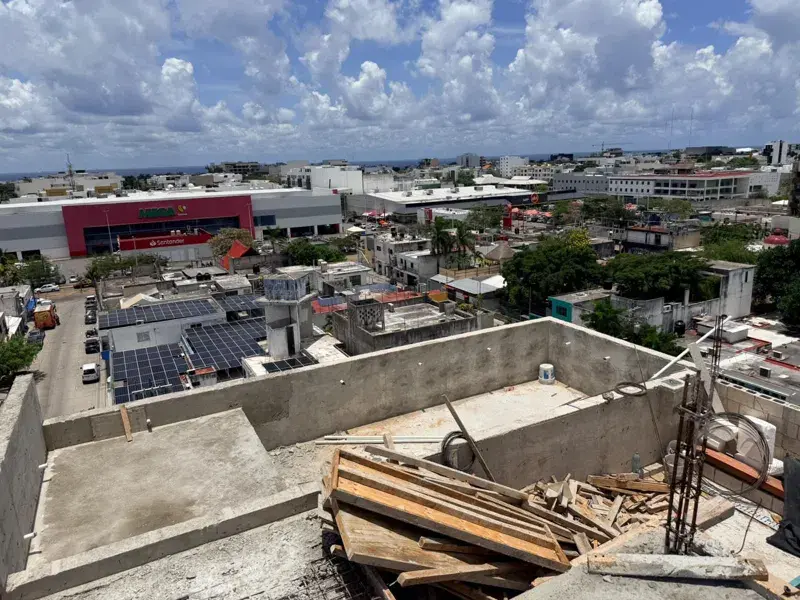
For years, developers faced strict height limitations (historically capped around 16 meters in many commercial and residential zones). The new PDU acknowledges that continuing outward expansion is ecologically and logistically unsustainable.
The Investment Angle: Expect new zoning codes that allow for greater structural height and density (upzoning) within the established urban core. Investors holding central land or older, low-density commercial assets may see sudden spikes in underlying land valuation as vertical redevelopment becomes legally viable. The city is also targeting the development of over 1,500 hectares of internal "urban voids" to consolidate the existing footprint.
2. Strict Environmental, Social, and Governance (ESG) Enforcements
Recent scientific studies, such as the Cenotes Urbanos project in mid-2026, have highlighted critical contamination levels in the groundwater beneath the city's urban footprint due to inadequate drainage and makeshift septic systems.
The Investment Angle: The new PDU is highly focused on mitigating this. Future developments will face stringent requirements for autonomous water treatment, proper drainage integration, and lower Coefficients of Soil Occupancy (COS) to preserve permeability. Furthermore, the introduction of municipal "Protected Natural Areas," including new linear parks, will restrict development in ecologically sensitive corridors. Capital allocators must underwrite higher upfront infrastructure costs for new builds.
3. Mobility Corridors and Infrastructure Unlocking
Traffic congestion has become a severe bottleneck for Playa del Carmen's logistics and tourism sectors. The 2026 framework is placing a heavy emphasis on mobility, specifically proposing new bypasses (libramientos) to divert heavy traffic. Current proposals include utilizing existing paved routes near communities like Vida y Esperanza to connect with northern high-tension line corridors.
The Investment Angle: Land parcels adjacent to these proposed mobility corridors and bypasses are primed for commercial, warehousing, and logistics development. Improving connectivity will unlock historically undervalued peripheral zones, provided they fall within the newly approved development polygons.
Strategic Advisory Outlook
For our private clients and institutional partners, the immediate directive is cautious positioning.
Halt Speculative Peripheral Land Banking: The municipal government is actively trying to curb irregular settlements and outward sprawl. Purchasing unzoned land on the far outskirts of the city with the hope of future urbanization is currently a high-risk strategy.
Prioritize Eco-Compliant Assets: Properties that already possess advanced water treatment infrastructure or sit outside of newly proposed conservation overlays will command a premium. The market is shifting from "growth at all costs" to "sustainable yield."
Prepare for Core Upzoning: Review current portfolios for underutilized assets within the urban center (Centro, Zazil-Ha, Hollywood). Once the height restrictions are officially lifted in the finalized PDU, these sites will become prime targets for multi-family, mixed-use, or boutique hotel redevelopment.
The regulatory environment is fluid. We will continue to monitor the Solidaridad Cabildo's voting schedule and issue an updated brief the moment the 2026 PDU is officially enacted into law.


Comments